Letter to the Editor: Strengthening Antimicrobial Resistance Control Practice at Dr. M. Djamil Central General Hospital Padang, Indonesia
Article Sidebar
Main Article Content
Abstract
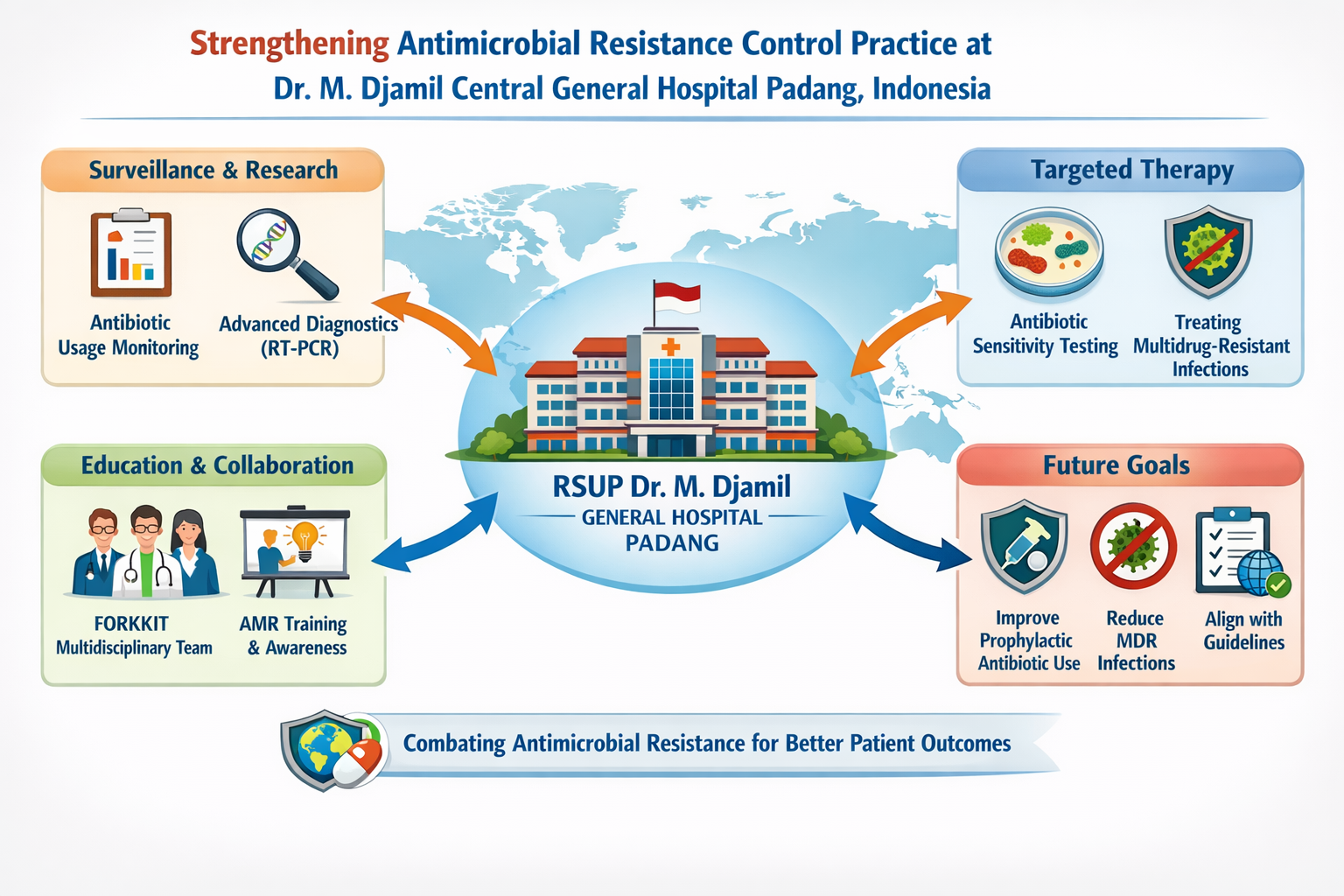
Dr. M. Djamil Central General Hospital (RSUP Dr. M. Djamil) Padang has been at the forefront of efforts to combat antimicrobial resistance (AMR) through a comprehensive antimicrobial stewardship program guided by the Antimicrobial Resistance Control Committee (KPRA). The program focuses on three key components: surveillance, research, and education. Notable achievements include significant reductions in inappropriate antibiotic use, enhanced treatment strategies, and improved patient outcomes. A robust surveillance system has tracked both the quantity and quality of antibiotic use, leading to a marked increase in rational antibiotic prescriptions. Additionally, the implementation of antibiotic sensitivity patterns has allowed for more targeted therapies, particularly in treating multidrug-resistant organisms. Multidisciplinary collaboration through the Forum Kajian Kasus Infeksi Terintegrasi (FORKKIT) has further optimized patient care. Ongoing research into advanced diagnostic tools, such as RT-PCR, has advanced AMR control efforts, contributing to more precise treatments. Despite these successes, the continued prevalence of multidrug-resistant infections highlights the need for sustained efforts in surveillance, research, and education. Looking forward, RSUP Dr. M. Djamil Padang aims to reduce the incidence of these infections, improve prophylactic antibiotic administration, and align practices with national and international guidelines. The hospital’s commitment to advancing research and collaboration is vital in the global effort to preserve antibiotic effectiveness for future generations
Article Details

This work is licensed under a Creative Commons Attribution 4.0 International License.
How to Cite
References
Saleem Z, Sheikh S, Godman B, Haseeb A, Afzal S, Qamar MU, et al. Increasing the use of the WHO AWaRe system in antibiotic surveillance and stewardship programmes in low- and middle-income countries. JAC Antimicrob Resist. 2025;7(2):dlaf031.
Adekoya I, Maraj D, Steiner L, Yaphe H, Moja L, Magrini N, et al. Comparison of antibiotics included in national essential medicines lists of 138 countries using the WHO Access, Watch, Reserve (AWaRe) classification: a cross-sectional study. Lancet Infect Dis. 2021;21(10):1429-1440.
Ajulo S, Awosile B. Global antimicrobial resistance and use surveillance system (GLASS 2022): Investigating the relationship between antimicrobial resistance and antimicrobial consumption data across the participating countries. PLoS One. 2024;19(2):e0297921.
Khadse SN, Ugemuge S, Singh C. Impact of Antimicrobial Stewardship on Reducing Antimicrobial Resistance. Cureus. 2023;15(12):e49935.
Fadrian F, Aliska G, Utami WN. The Relationship Between Appropriateness of Antibiotic Use Based on the Gyssens Algorithm and Mortality: A Retrospective Cohort Study in Indonesian Tertiary Hospital. Acta Med Indones. 2024;56(2):137-144.
Fadrian F, Linosefa L, Afida KN, Muharramah DH, Ulvyana V, Mizan P, Putri VY. Validation of CRownLab Pneumoplex for the Detection of Klebsiella pneumoniae and Acinetobacter baumannii Using RT-PCR in Patients With Sepsis at a Tertiary Hospital in Indonesia. Int J Microbiol. 2026;2026:8576494.